
Not every story is born to win awards. Not every poem dreams of being published. And not every writer begins with a goal in mind. Some simply write because their heart asks them to. Today, more and more young authors are embracing this quiet freedom—writing without chasing success, without the weight of expectations, and without the constant need to define a “purpose.” In a society that measures worth by outcomes, these young voices are quietly proving that the journey itself can be just as powerful as the destination.

For many of them, writing is not a project but a pulse. It is how they make sense of a noisy and uncertain world. Their notebooks carry the burden of unspoken emotions, their phone notes overflow with scattered thoughts, and their computer screens glow with half-written stories that may never be finished. To an outsider, this might look incomplete or “pointless,” but to the writer, it is enough. Because the act of writing itself becomes a form of healing, a way of grounding themselves when everything else feels chaotic.
Take Meera, for example—a sixteen-year-old who writes poems in the back of her science notebook during class. She never shows them to anyone, not even her closest friends. But every verse she writes helps her untangle the storm inside her mind. For her, writing isn’t about building a career; it’s about survival. Each page is a silent conversation with herself, a reminder that her feelings have a place in this world, even if no one else ever reads them.

Or consider Aarav, a college student who types out long, rambling short stories at night. He never finishes them. His folders are full of drafts that start with strong beginnings and fade away mid-sentence. And yet, he feels no regret. To him, those stories aren’t failures—they are snapshots of the person he was at that moment. Every unfinished piece carries a memory, a reflection, a piece of his growth. For Aarav, the destination doesn’t matter. The journey of writing itself is enough.
Then there’s Sana, who writes letters she never sends. To her late grandmother, to friends she lost touch with, even to a future version of herself she hasn’t met yet. She keeps them folded in a box under her bed. No one knows about them. But those letters are her way of staying connected, of processing love and loss. To her, writing is not about being seen by the world—it’s about seeing herself more clearly.
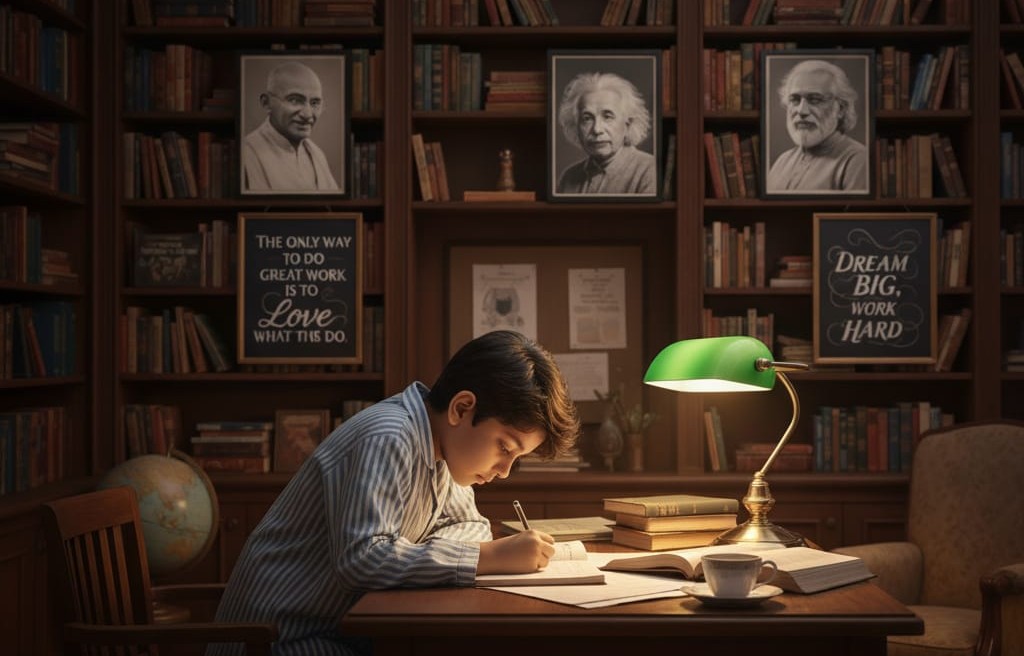
In a world obsessed with asking “What’s next?” there is something deeply courageous about not knowing the answer. To write without a plan is to admit that life itself doesn’t always come with one. These young authors remind us that uncertainty is not weakness—it’s honesty. They are not waiting for the perfect plot or the perfect career plan; instead, they are embracing the messy middle. They are learning to be okay with words that don’t lead anywhere specific, because sometimes that’s exactly how life feels—unfinished, unresolved, and unpredictable.
When there is no goal, words stop performing. They simply exist. They are not shaped to please an audience, polished to match trends, or edited to fit into a marketable genre. They flow raw and unfiltered, carrying with them the taste of truth. And in that rawness lies something rare: authenticity. This is writing at its purest—not to impress, but to express. It is like painting without worrying about selling the artwork, or singing without wondering about applause. The absence of pressure allows words to breathe freely, and often, those words end up touching hearts in the most unexpected ways.
It is easy to dismiss such writing as “directionless.” After all, we are conditioned to believe that every effort must have a clear outcome. But perhaps the real beauty lies in this lack of structure. When you are not writing for recognition, you are writing for yourself. And in doing so, you end up creating something that feels deeply personal, deeply human. Even if no one else reads it, you will look back at those words one day and realize they captured who you were in that moment. They become pieces of your soul preserved in ink.
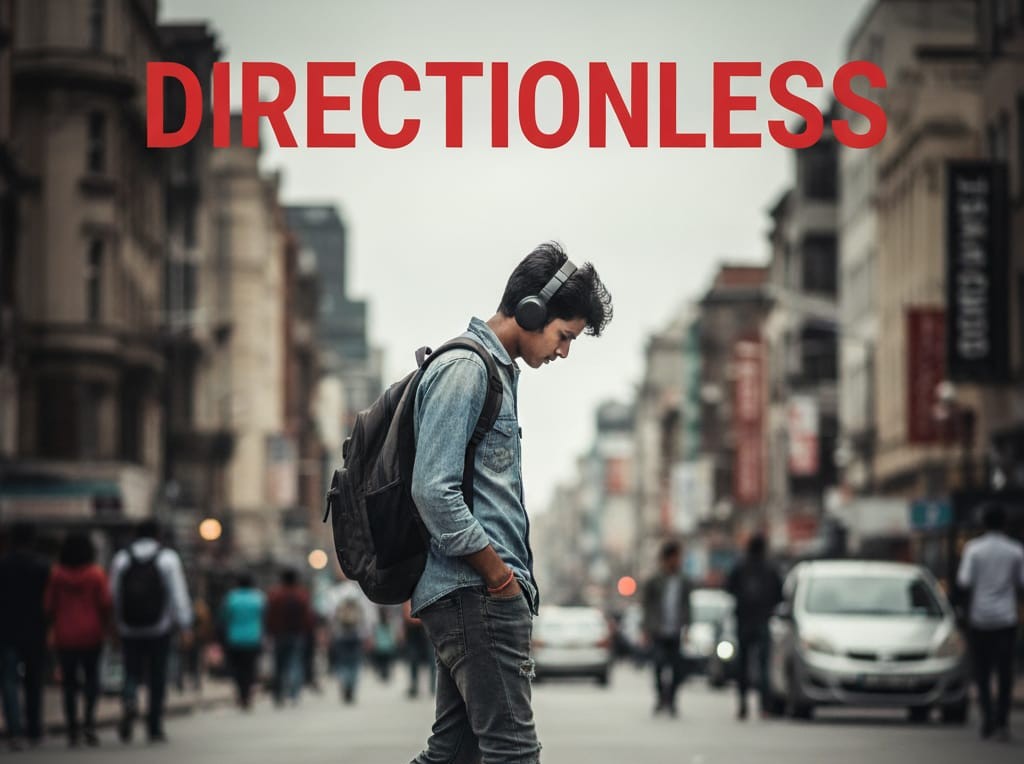
If you are a young writer who is filling pages without knowing why, this is your reminder: don’t stop. If you are writing poems that no one else may ever see, keep going. If your words feel small compared to the noise of the world, remember that every whisper carries its own power. Writing without a goal doesn’t mean your words are meaningless. In fact, it means they are freer, braver, and more real. You are not lost—you are discovering. And what you discover through your writing may not just be stories, but parts of yourself you didn’t even know were waiting to be found.
Because sometimes, the journey itself is the destination. The act of writing itself is the reward. Maybe you will never publish a book. Maybe you will never go viral. Maybe your words will only live inside your own private spaces. But even then, your writing has already served its greatest purpose: it has allowed you to feel, to understand, and to create. And maybe, just maybe, this is the kind of writing the world needs most right now—authentic, unpolished, and deeply human.
So here’s to the young authors who are writing without a map. Here’s to the ones who scribble in the dark, who type late into the night, who fill the margins of their notebooks with half-formed thoughts. You may not know where your words will take you, but that’s the magic of it. You are not failing by not having a goal—you are living proof that art doesn’t always need one. Your words matter, even if they reach no one else. They matter because they are yours.
PS: A Note to You
If you’re reading this and wondering whether your writing is “enough,” I want you to know—it is. You don’t need a roadmap to validate your journey. You don’t need applause to justify your words. Writing is not always about being read; sometimes it’s about being heard, even if the only person listening is yourself.
So write your stories, your poems, your scattered notes. Write the letters you never send, the drafts you never finish, the diary entries no one else will ever read. Write without asking, “What will this become?” Write because it feels right in this moment. Trust me—your words will find their place, even if that place is only within you. And that is more than enough.
 Shreyas Trivedi